.svg)

 Mind and Metrics
 20th янв, 2025
Switch mode
Unbossing: Designing High-Performance Systems for the Age of AI
The Latency Gap
Status Quo
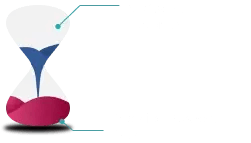
AI Speed: Seconds V/s Decision Speed: Days
Status Quo
AI Speed: Seconds V/s Decision Speed: Days
The modern workplace is suffering from a crisis of latency. In an era where AI generates output in seconds, decisions still take days—stuck in email chains, awaiting sign-offs from managers who are too far removed from the context to add value.
The solution isn't just "better management." It is a fundamental restructuring of how authority flows through an organization. Enter Unbossing.
This isn't about anarchy or the removal of leadership. It is about the removal of friction. It is the shift from a model based on control to a model based on context.
Here is the complete guide to what unbossing means, why AI is forcing the transition, and how to build a system where leaders act as architects rather than gatekeepers.
Core Definition
At its simplest, Unbossing is the systematic removal of unnecessary hierarchy and command-and-control behavior. It is a structural shift where the primary goal is to reduce the distance between the decision and the work.
In an unbossed environment:

Decision-making happens at the edge, by the people closest to the problem.

Trust is the default setting; people act without waiting for permission.

Leaders shift their identity from controllers to enablers, coaches, and system designers.

The Fundamental Shift:
In traditional structures, power is derived from position (your rank). In unbossed structures, power is derived from competence and context (what you know and where you sit in relation to the data).Where the Idea Comes From
Unbossing didn’t appear overnight. It is the inevitable convergence of economic reality and management theory.
1. The Knowledge Work Reality
Traditional management was designed for the Industrial Revolution. In a factory:
- Tasks were predictable.
- Outputs were standardized.
- Centralized control ensured consistency.
Today’s work—and the work of the future—is fundamentally different. It is cognitive, creative, ambiguous, and fast-changing. You can micromanage physical movement, but you cannot micromanage thinking. When you try to "boss" knowledge work, you simply slow it down.
2. The Management Thinkers
The intellectual lineage of unbossing runs deep:

Peter Drucker
Introduced "knowledge workers" and management by objectives.
Douglas McGregor
Proposed Theory Y (people are intrinsically motivated) over Theory X (people are lazy and need policing).
Agile & Lean
Popularized self-organizing teams to speed up software delivery.
Frederic Laloux (Teal Organizations):
Mapped the evolution toward evolutionary, purpose-driven systems.
3. The Corporate Catalyst
While the theory existed for decades, the term "unbossing" hit the mainstream when Novartis and CEO Vas Narasimhan adopted it publicly. Their goal was clear: fewer layers, more empowerment, and leaders evaluated solely on how well they removed obstacles for their teams.
What Unbossing Actually Looks Like
Unbossing is often mistaken for a vague "be nice" culture. It is not. It is a rigorous operational system with concrete characteristics.
The Leadership Shift Table

Traditional
-
 Giving Answers
-
Approving Work
-
Controlling Output


Unbossed
-
Asking Questions
-
Removing Obstacles
-
Designing Systems

1. The Mechanics of Decision-Making
In an unbossed team, authority is distributed, not centralized. Decisions are not made by the person with the highest salary, but by the person with:
- The most current information.
- The closest proximity to the problem.
The Leader’s Role:
Leaders do not make the decisions; they define the boundaries within which decisions can be made.
2. The New Leadership Profile
The day-to-day behavior of a leader changes drastically:
- From Giving Answers → Asking Better Questions.
- From Approving Work → Removing Obstacles.
- From Controlling Output → Designing Systems.
A good unbossed leader sets the direction, creates extreme clarity on standards, and then intervenes only when the system fails.
3. Accountability (The Missing Link)
Critically, unbossing increases accountability. In a hierarchy, it is easy to hide behind "my boss didn't tell me to do that." In an unbossed system:
- Outcomes matter more than activity.
- Transparency replaces supervision.
- Ownership is absolute.
What Unbossing Is Not
This is where most implementations fail. Companies remove structure without replacing it with clarity, leading to chaos.

Not "No Leadership"
Unbossing does not mean everyone does whatever they want. It does not mean a lack of strategy, standards, or consequences. That is simply negligence.
Not "Consensus-Everything"
Unbossed organizations do not vote on every decision. Consensus is a slow death for execution. Clear ownership still exists; it just sits with different people. Some decisions remain explicitly non-democratic.
Not "Flat for the Sake of Flat"
Removing job titles without fixing the power dynamics creates informal politics. Without clear structure, power vacuums form, and the loudest voices dominate. Unbossing removes unnecessary hierarchy, not all structure.

Preconditions for Unbossing to Work
You cannot simply declare "we are unbossed" on a Monday and expect high performance on a Tuesday. Unbossing fails without strong foundations. It requires you to return to the basics of your company identity and operations.
1. A Non-Negotiable "North Star"
Unbossing requires a strong compass. If you remove the boss, you must replace them with a shared vision. Companies must return to and rigorously refine their:

Mission
Why we exist.

Vision
Where we are going.

Values
How we behave when no one is watching.
If these are vague corporate jargon, unbossing will fail. In the absence of a boss, the "North Star" is the only thing telling your team which way is forward.
2. High Talent Density
Unbossing assumes you have hired competent adults. Weak hiring kills unbossed systems because low performers cannot manage their own ambiguity.
3. Operational Physics (Written & Accessible)
You cannot unboss a team if they don't know how to do the work. The biggest mistake is locking processes away in obscure PDF manuals that no one reads.
- Processes must be written down.
- Processes must be discoverable instantly.
- Processes must be "living" documents.
Shifting to AI-Enabled Wikis:
Modern unbossing relies on AI-enabled knowledge bases where answers are retrieved instantly, not hunted for. At Mind & Metrics, we use a mix of Google Drive with Gemini for deep knowledge retrieval and Supered.io for step-by-step visual instructions that appear directly in the workflow. If the process isn't easy to find, it doesn't exist.
4. Psychological Safety
People must be able to disagree openly, admit mistakes, and challenge ideas without fear. Without this, autonomy becomes performative.
Why Companies Want Unbossing (Now)
Unbossing is not a philanthropic endeavor; it is a competitive response to market pressure.
In an unbossed environment:

Speed
Speed beats permission.

Innovation
Innovation beats compliance.

Retention
Modern senior talent will not tolerate meaningless approvals or performative leadership.
.png?width=565&height=289&name=image%20(35).png)
The Fundamental Shift:
As AI and automation reduce the need for information gatekeepers, the traditional "middle manager" role—defined by passing information up and orders down—is becoming obsolete. Unbossing is the restructuring required to adapt to this reality.
Where Unbossing Breaks Down
The failure rate is high. Unbossing usually breaks down because of leadership psychology, not employee capability.
Common failure points include:

The Ego Trap
Leaders want autonomy for their teams but refuse to give up power.

The "Shadow" Boss
Leaders say "you decide", but then override decisions they dislike.

The Friendly Fallacy
Confusing "being friends" with "being a leader".
The fastest way to kill unbossing:
"We trust you—unless we disagree".Unbossing & The Rise of Hybrid Teams
Unbossing is becoming non-optional in AI-enabled organizations because the definition of a "team" is changing. We are moving toward Hybrid Teams—a concept championed by tech leaders like Karen Ng.
The Hybrid Team
01
People [ Judgment, Strategy, Relationships ]
02
AI Agents [ Autonomous execution, Research ]
03
AI Assistants [ Co-pilots, Busywork ]
04
Unified Data [ Context ]
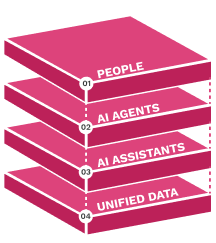
The Manager is no longer the API between people; the System is.
1. The Inner Workings of Hybrid Teams
As Ng notes, success no longer equals headcount. Small, unbossed teams can now compete with massive enterprises by integrating two distinct types of workers:

People
Who lead, define taste, set the strategy, and own the relationships.

AI
Which accelerates execution, scales personalization, and removes latency.
In a hybrid team, the roles are distinct: People provide the judgment; AI provides the leverage.
2. Building the Hybrid Structure
To make this work in an unbossed environment, you need three layers:

Unified Data
You cannot have a hybrid team if your data is trapped in silos. Your "AI teammates" need context to function.

AI Assistants
Tools that work alongside your people to handle the busywork, freeing them for high-level creative thinking.

AI Agents
Autonomous agents that work independently (with human guidance) to execute tasks like customer support or initial research.
The Unbossed Reality:
In this model, the "manager" is no longer needed to pass work between people. The system manages the flow; the people manage the quality. AI forces unbossing because it exposes bottlenecks instantly—if the AI can do it in seconds, but the approval takes two days, the leadership structure is the problem.The Real Trade-Off
Unbossing is not a free lunch. It involves a difficult trade-off for leaders:
- You trade Control → for Leverage.
- You trade Certainty → for Speed.
- You trade Compliance → for Ownership.
This is emotionally difficult. Leaders lose the illusion of control and must shift their identity from being the "Knower" to being the "Architect." Many fail here because their self-worth is tied to being the person everyone needs to ask for permission.

Bottom Line
Unbossing is not anti-leadership. It is anti-bureaucracy, anti-micromanagement, and anti-ego.
When done well, it produces faster decisions, stronger ownership, and systems that scale without heroics. When done poorly, it produces chaos.
The success of unbossing relies on a simple question for every leader: Are you willing to design the system instead of starring in it?

We Proudly Serve the World.
.svg)
2025 © Copyright Mind & Metrics. All rights reserved.